






What Actually Suits an Australian Installation
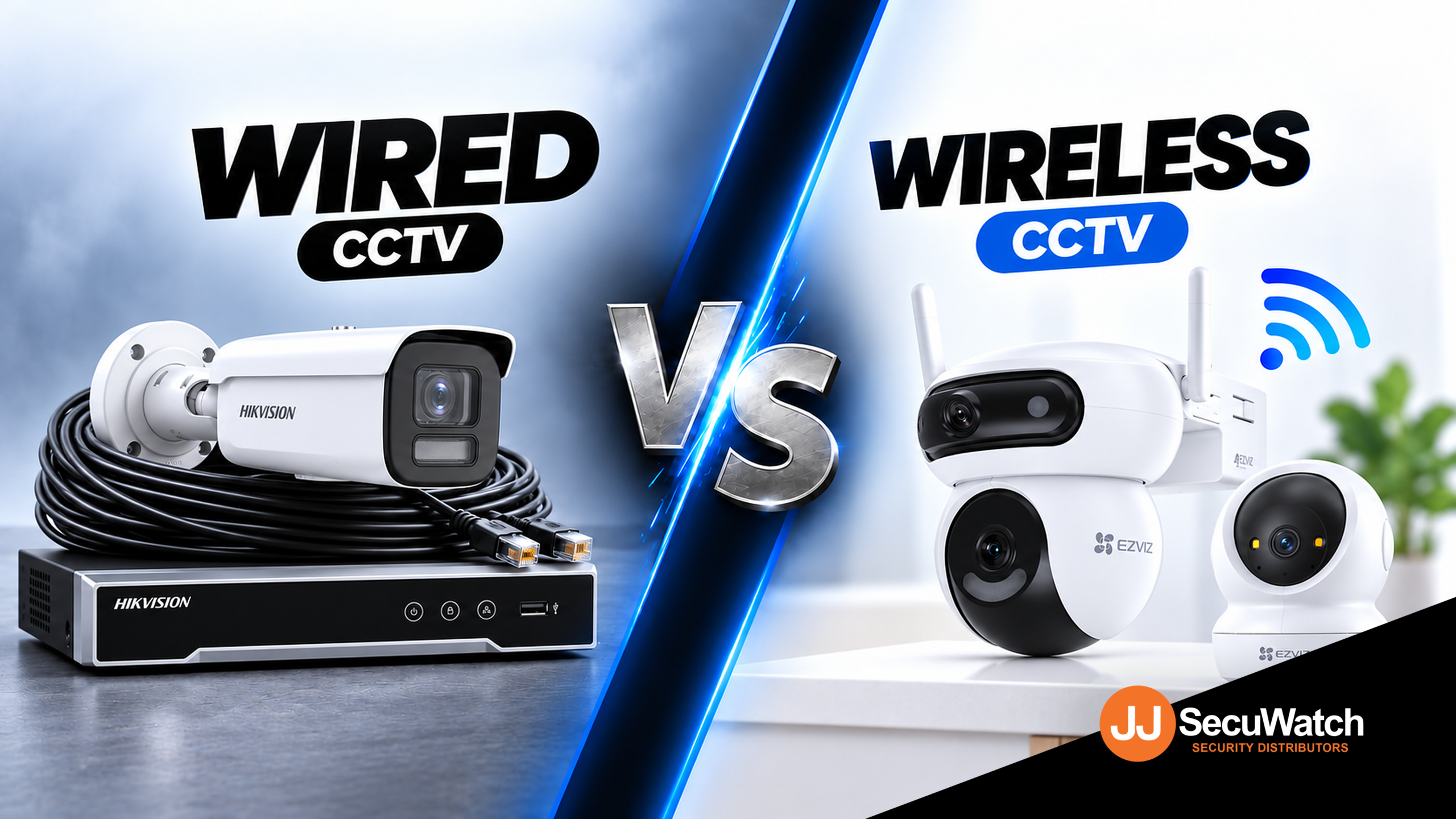
If you’re weighing up wired or wireless CCTV for a home or business, the honest answer is that both work well these days. The real question isn’t which one is “better.” It’s which one actually fits your property, your budget and how much cabling you’re prepared to deal with. Here’s how to think it through properly.
What "Wired" Actually Means Today
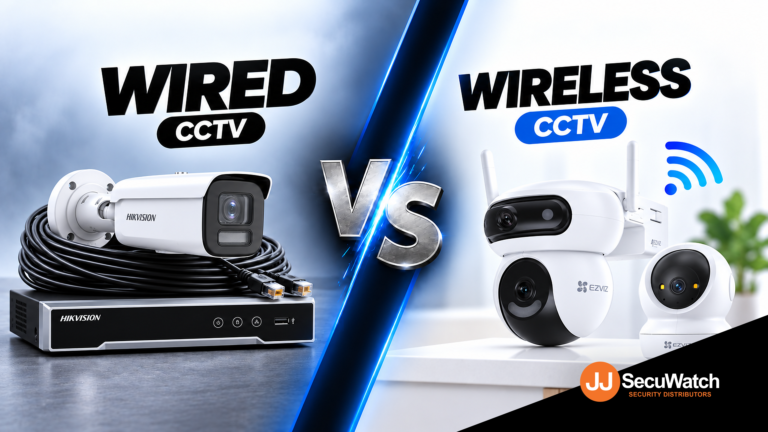
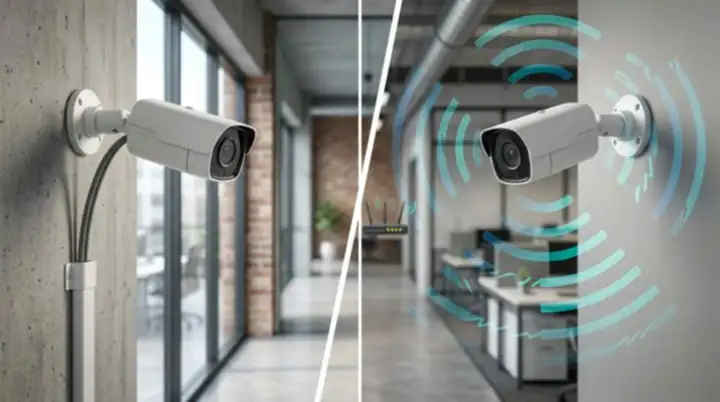
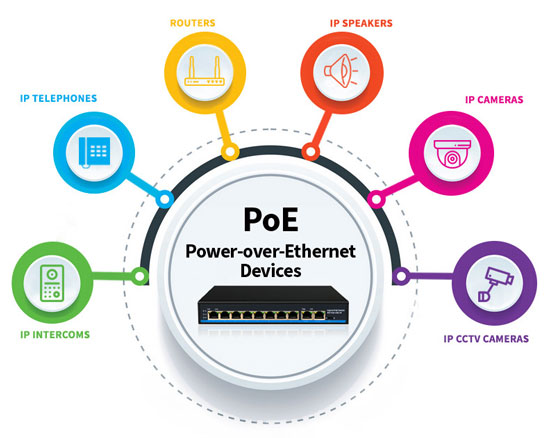
When people say “wired CCTV,” they’re usually talking about a PoE system. That stands for Power over Ethernet, and it means one cable carries both power and video data to each camera. No separate power supply needed at every camera location, just a single Ethernet run back to a recorder.
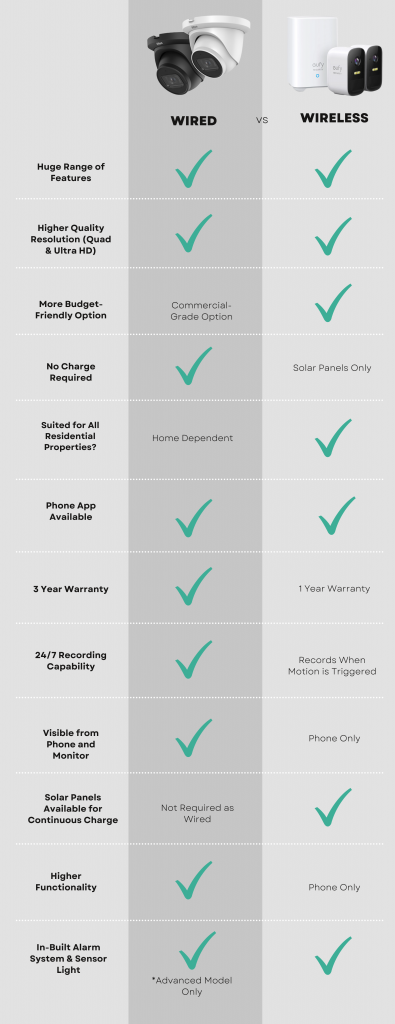
This is still the gold standard for permanent installations, and there’s a good reason for that. A wired connection isn’t fighting for bandwidth with your Wi Fi router, isn’t affected by walls or interference, and won’t drop out during a storm the way a wireless signal sometimes can. For a business that genuinely needs 24 hour, uninterrupted footage, that reliability matters a lot more than the extra effort of running cable.
What "Wireless" Actually Means
Wireless CCTV generally falls into two camps. The first is Wi Fi cameras that connect to your existing home or business network and store footage locally or in the cloud. The second is battery or solar powered cameras that don’t need any wiring at all, not even for power.
The appeal here is obvious. No drilling, no cable runs, no need to plan the install around where you can physically get a cable to. For a renter, an apartment, or someone who just wants a camera up this weekend, wireless is genuinely the easier path.
The trade off is that you’re now relying on your Wi Fi signal reaching every camera reliably, and on either a battery lasting or a solar panel doing its job through Australian weather. Neither of those is a dealbreaker, but they are things to plan around properly rather than assume will just work.
Some brands that focus on wireless securit are Eufy, Ring Intercom, Swan Wireless. Many brands actually do both.
Where Wired Makes More Sense
Choose wired if you’re in any of these situations:
You’re installing permanently and don’t mind an electrician or installer running cable once, properly, so you never think about it again.
You need continuous, reliable recording without gaps, particularly for a business where footage might end up being used as evidence.
You’re covering a large property or commercial site where Wi Fi signal simply won’t reach every camera location reliably.
You want to avoid ongoing subscription costs, since wired systems overwhelmingly record to a local NVR rather than the cloud.
Where Wireless Makes More Sense
Choose wireless if you’re in any of these situations:
You’re renting or can’t run cables through walls without real hassle or landlord approval.
You need a camera up quickly, without booking an installer or planning an install around cable runs.
You’re covering an outdoor area like a shed, gate or driveway where running power is impractical, and a solar or battery camera solves that cleanly.
Your coverage needs are modest, a couple of cameras rather than a full multi camera system.
The Australian Factor Nobody Talks About Enough
Australia isn’t a small consideration here, it actually changes the calculation a bit. Long, hot summers mean solar powered wireless cameras genuinely perform well across most of the country, since there’s rarely a shortage of sunlight to keep them charged. That’s a real point in favour of wireless for outdoor, hard to wire spots.
On the flip side, a lot of Australian homes and businesses sit on larger blocks or have outbuildings, sheds and car parks some distance from the house. Wi Fi doesn’t always reach that far reliably, and that’s exactly the situation where a wired PoE run, even a longer one, ends up being the more dependable choice.
What To Actually Do Next
If you’re not sure which setup suits your site, the honest move is to talk it through with someone who installs these systems for a living, rather than guessing from a spec sheet. Tell them what you’re protecting, how the property is laid out, and what your budget looks like, and a good installer will mix wired and wireless where it actually makes sense rather than pushing you toward whichever one they happen to stock more of.