

Posted on — Leave a comment

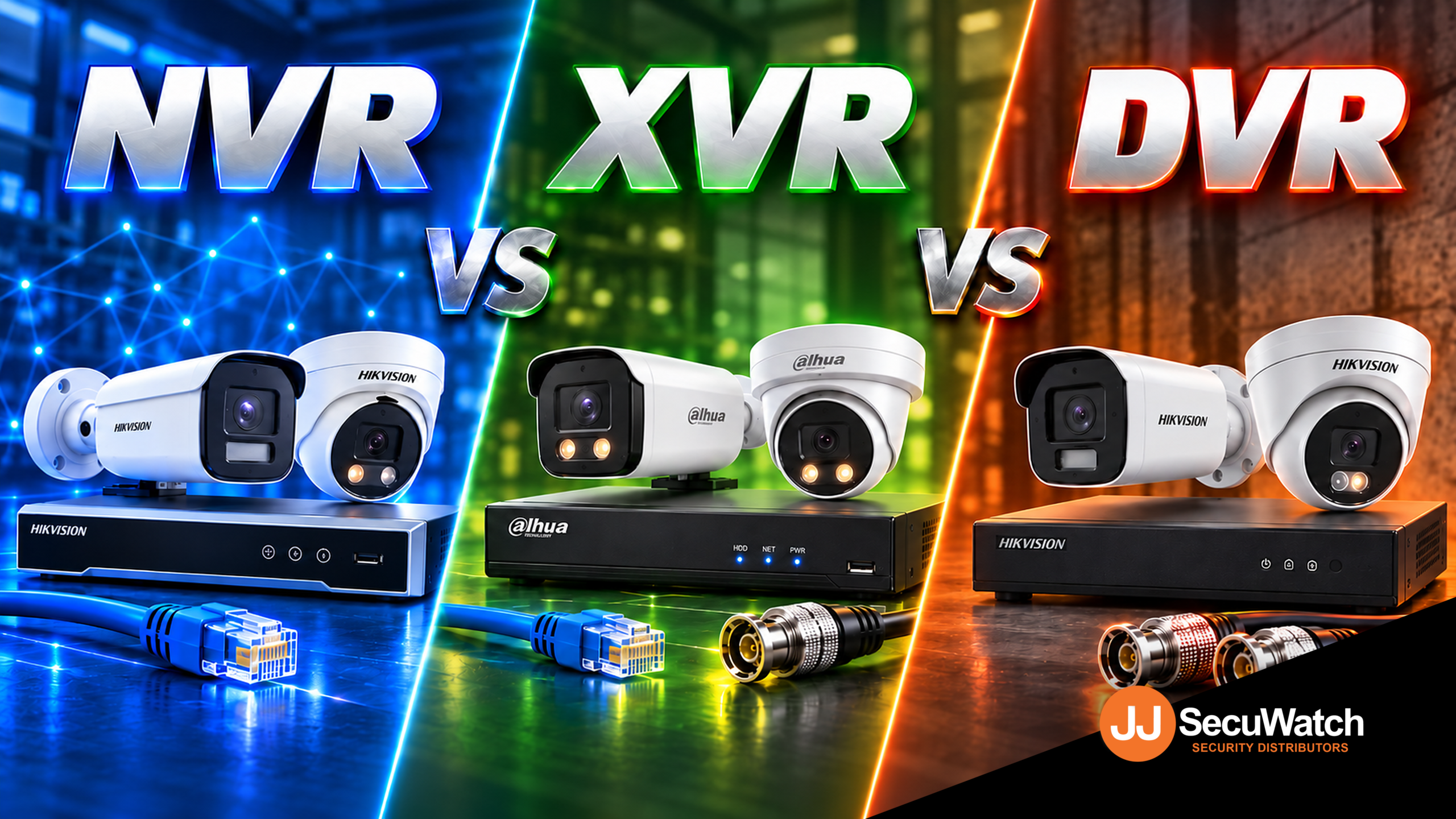
NVR vs XVR vs DVR

What's the Difference?

If you’ve spent five minutes looking into CCTV systems, you’ve probably run into these three acronyms and wondered if they’re actually different things or just marketing terms for the same box. They’re genuinely different, and picking the right one affects what cameras you can use, how good your footage looks, and how much rewiring an upgrade might need. Here’s the plain-English breakdown.

DVR: The Original Recorder

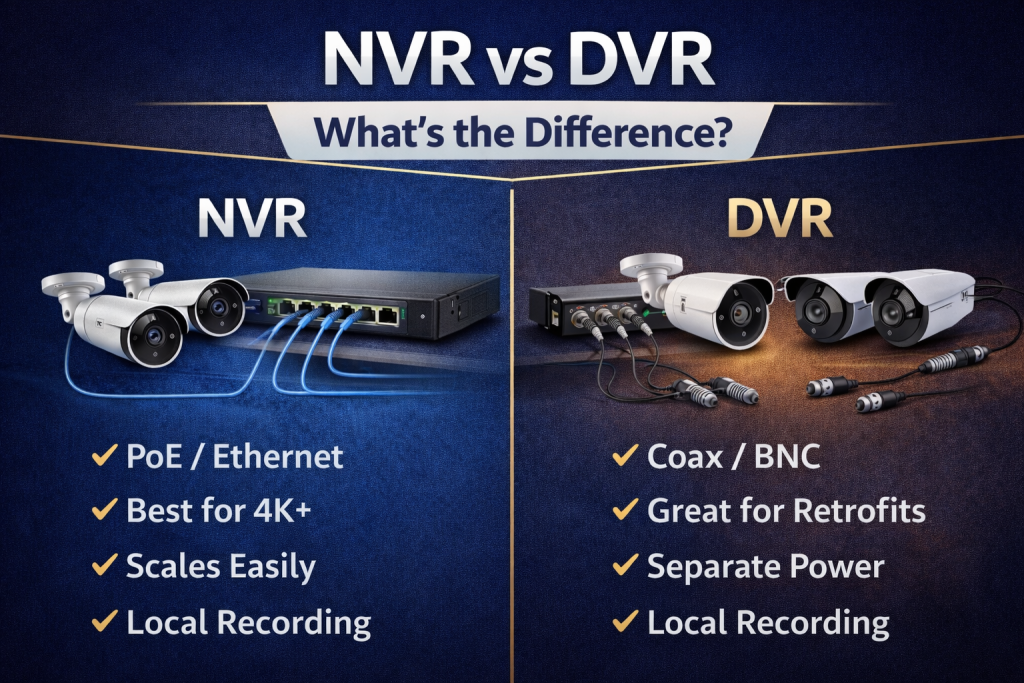
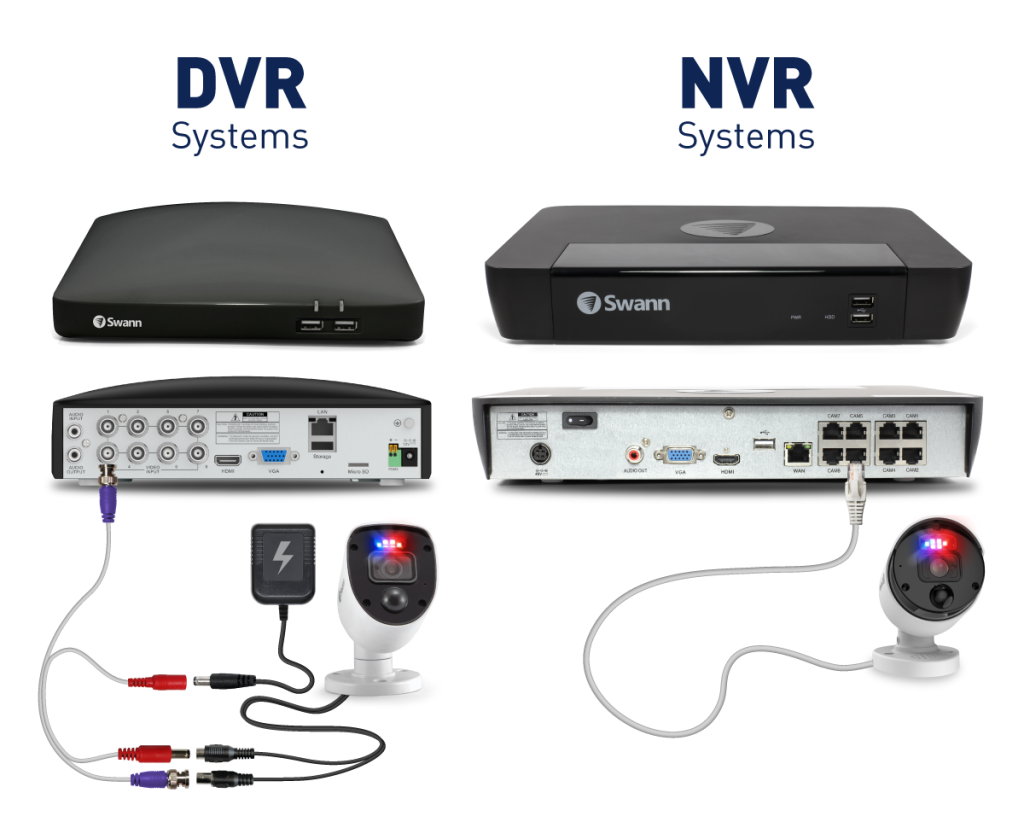
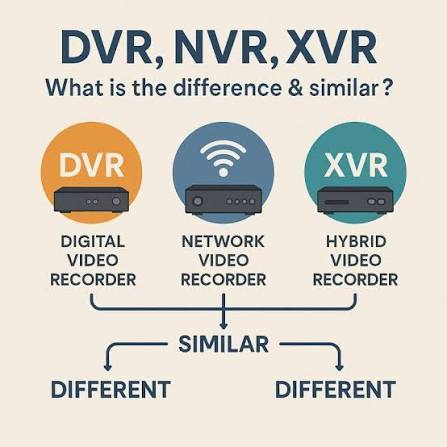
DVR stands for Digital Video Recorder, and it’s the oldest of the three. A DVR works with analogue cameras, the kind that send a raw video signal down a coaxial cable rather than data over a network.

The recorder itself does all the heavy lifting, converting that analogue signal into digital footage you can actually store and review. It’s simple, reliable technology that’s been around for decades, which is exactly why so many older systems still use it.

The catch is resolution. Analogue cameras are fundamentally limited compared to newer IP cameras, so even a “high-end” DVR system will struggle to match the image quality of a basic modern IP camera.

NVR: The IP Camera Recorder

NVR stands for Network Video Recorder, and it’s built for IP cameras, the kind that connect over a network (usually via an Ethernet cable) rather than a dedicated coaxial line.

Here’s the key difference in how it works: an IP camera does its own video processing and compression before sending the footage over the network. The NVR’s job is mostly to receive, store, and let you review that already-processed footage, rather than converting a raw analogue signal itself.

This is why NVR systems are usually paired with much sharper cameras, since IP cameras aren’t limited by the same resolution ceiling as analogue ones. It’s also why most current AI features, like human and vehicle detection, live on NVR systems rather than DVR ones, since that intelligence is processed by the camera itself.

XVR: The Hybrid Option

XVR stands for a few things depending on who you ask (some say “multi-channel Video Recorder,” others just treat it as a catch-all hybrid term), but functionally it means one thing: flexibility.

An XVR can typically handle multiple camera types on the same recorder, analogue, HD-TVI, HD-CVI, AHD, and in many cases IP cameras too, all on the same box. That makes it genuinely useful for one specific, common situation: upgrading an existing system without ripping out cabling that’s already run through walls and ceilings.

If a site already has coaxial cabling installed from an older analogue system, an XVR lets you swap in newer, sharper cameras that use that existing cabling, without needing to run new network cable everywhere.

Which One Should You Actually Get?

If you’re starting completely fresh with no existing cabling, go IP (NVR). You’ll get better image quality, proper AI detection, and a system that’s genuinely future-proof rather than tied to older analogue limitations.

If you’ve already got an analogue system installed and coaxial cabling run through the building, an XVR is usually the smarter move. You get to upgrade your cameras to something sharper without the cost and disruption of rewiring the whole site.

DVR-only systems are becoming harder to justify for anything beyond the most basic, budget-constrained jobs, since an XVR generally does everything a DVR does and more, often for a similar price point.

Talk to Someone Before You Buy

The right choice really does depend on what’s already at the site, not just which recorder sounds most modern. If you’re not sure whether your existing cabling can be reused, or which recorder actually matches the cameras you want, that’s exactly the kind of question worth asking before you buy anything, not after.

Recent News

Wired vs Wireless CCTV: What Actually Suits an Australian Installation

What Actually Suits an Australian Installation If you’re weighing up wired or wireless CCTV...
Hikvision or Dahua- Which is better?

Dahua vs Hikvision: Which Should You Choose? If you’re speccing a CCTV job in 2026, chances...

Ruijie Solar Switch

Outdoor Solar Networking, Sorted: The Ruijie Reyee RG-ES207GS-AC-OD Brand voice applied: confident...

Ruijie Industrial Switch/Router

Ruijie Industrial Switches – NIS2K & NIS3100 Series As an authorized networking distributor, we...

Milesight with NX Witness

Introducing Milesight We are proud to supply and support the complete range of Milesight CCTV and...
Leave a Reply

Your email address will not be published. Required fields are marked *